
Virtual Reality Training for Energy & Utilities Crews
VR Vision builds virtual reality training for utilities, power generation and renewables: substation, switching, SF6 gas handling and wind turbine procedures practiced in digital twins of your own equipment, with no outage and no live exposure. Roughly 80% of VR Vision's work is in energy and utilities, for clients including Hydro One, Toronto Hydro, Avangrid and Enel.
What problem does VR training solve for energy and utility companies?
VR training closes the gap between the classroom and live, energized work. Utilities cannot take a substation, feeder or turbine out of service so a new technician can practice, so crews often meet rare, high-consequence procedures for the first time in the field.
That gap shows up in four places VR Vision hears about on almost every utility project:
- Assets that cannot come offline. Hands-on practice on switchgear, transformers or turbines means planned outages, standby crews and real exposure to hazards.
- Rare procedures that are hard to stage. SF6 gas handling, isolation and grounding, and emergency response happen too rarely for crews to stay sharp by doing them live.
- Crews spread across a large territory. Bringing technicians to one training centre costs travel time and pulls people off the schedule.
- Knowledge walking out the door. Experienced technicians retire, and their procedures need to be captured in a form new hires can practice, not just read.
New to the technology? Start with VR Vision's guide to virtual reality training: what it is, what it costs and how to measure results.
How does VR Vision train energy and utility crews?
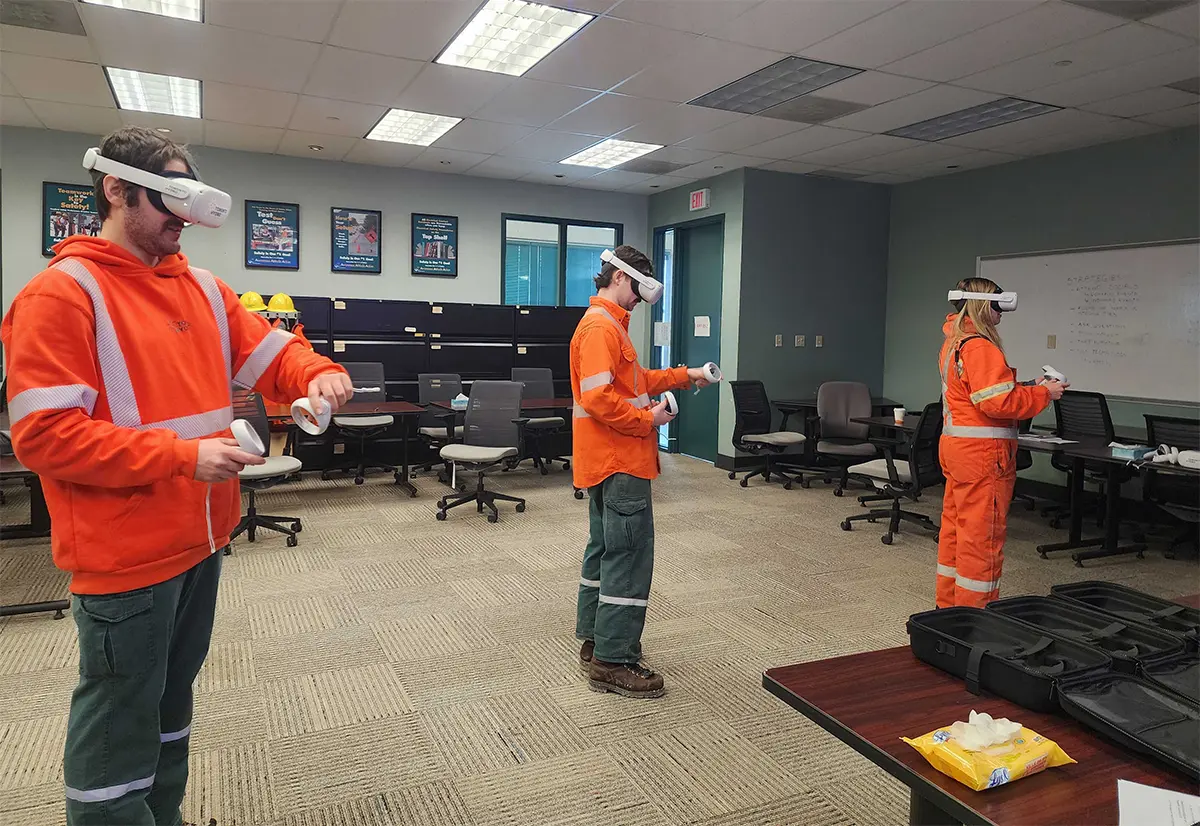
VR Vision rebuilds your real equipment and procedures as interactive digital twins, then deploys them on standalone headsets that crews use at the depot, yard or service centre. Every session is tracked in Vision Portal, so supervisors can see who completed what, and where people made mistakes.
Substation and switching procedures
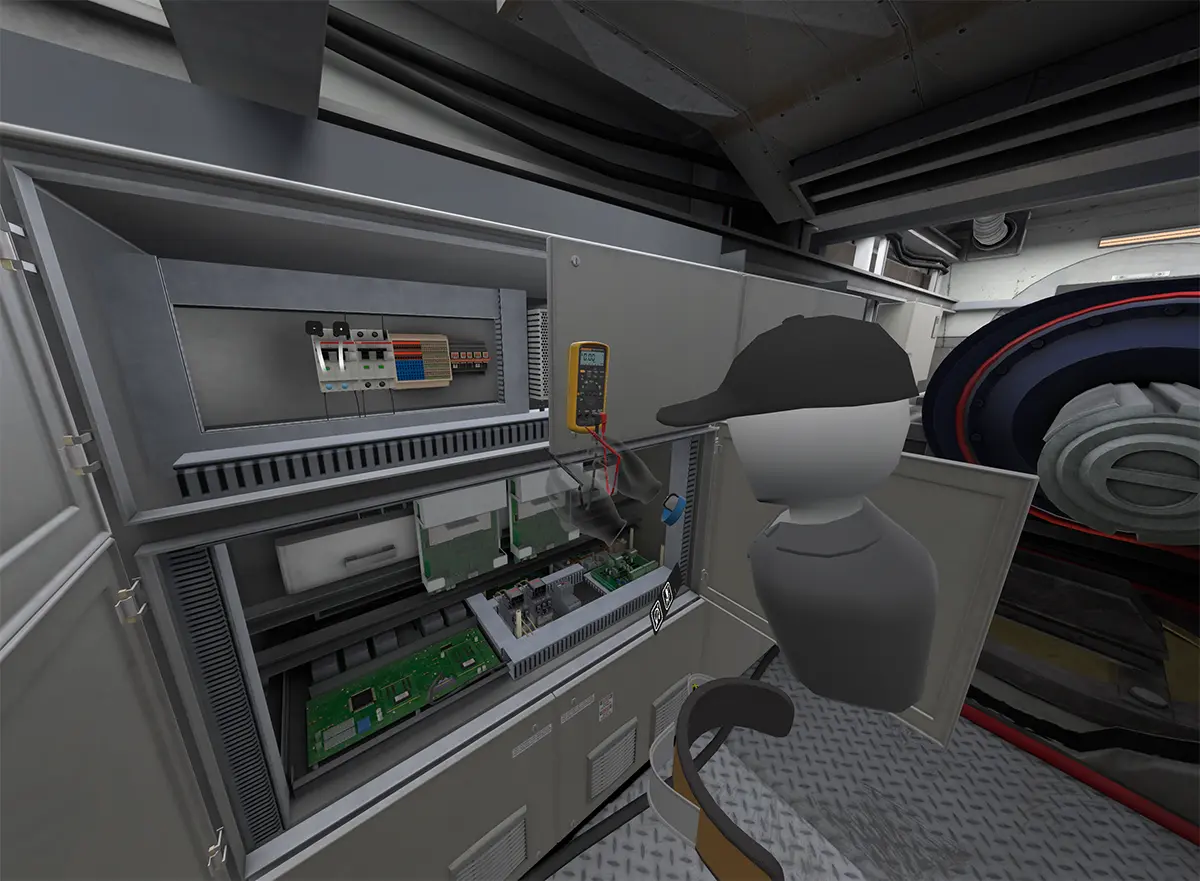
Walkthroughs, isolation, grounding and switching sequences on a 1:1 replica of your substation layout, with wrong steps flagged in real time.
SF6 and high-voltage equipment
Procedural practice on switchgear tasks such as SF6 gas replacement, built from your own work methods. Avangrid trains this in VR today.
Wind and renewable maintenance
Turbine maintenance, crane and hoist operation and site safety for onshore and offshore teams, as used by Avangrid and Siemens Gamesa.
Customer care and field context
Interactive 360 video that lets office and customer care teams see the work through a technician's eyes, as Hydro One did for its customer care training.
A ready-to-license module library
Start faster with the library of 100+ ready-to-license VR training modules for utilities, then customize to your standards.
Built for utility IT teams
Vision Portal supports SSO, MFA, role-based permissions and an on-prem or air-gapped option. LMS integration (SCORM 1.2/2004, xAPI) is available on request.
Crews train on Meta Quest 3S or PICO 4 Enterprise headsets, with hand tracking supported. VR Vision is an authorized Meta and PICO partner, so hardware, device management and support come from one team.
Watch: the 2026 VR Vision show reel.
Want to see your substation or turbine in VR?
Book a DemoWhat results have utilities seen with VR Vision?
Utilities using VR Vision report faster time to competency and more consistent crews. The figures below come from published VR Vision case studies.
Maintenance technicians train in a multiplayer VR world covering substation walkthroughs, wind turbine maintenance and SF6 switchgear work, with results reported into the LMS.
Read the Avangrid case studyThree years in, with 40 Quest 2 and Quest 3 headsets and new content added regularly for scenarios that are hard to recreate safely.
Read the Toronto Hydro case studyStereoscopic 360 video with spatial audio gives customer care teams first-hand context from the field.
Read the Hydro One case studyHow does delivery work, and how long does it take?
Licensed modules reach a field pilot in 1 to 2 months. Custom builds reach a pilot in 3 to 4 months. VR Vision handles content, headsets, deployment and support, so your training team is not managing a software project on top of its day job.
Discovery
Map the procedures, equipment and sites that carry the most risk or cost, and agree how success will be measured.
Build or configure
License existing utility modules or build custom digital twins from your drawings, photos and work methods.
Field pilot
Run the training with a real crew, collect Vision Portal data and refine the content with your SMEs.
Roll out and measure
Scale across depots and service centres, with completion, scores and error data tracked per technician.
Budgeting? A custom VR project typically runs $60K to $120K, and interactive 360 video runs $30K to $60K per module. Model your own payback with the VR training ROI calculator, or compare vendors with the Industrial VR Training Buyer's Guide.
Energy and utilities VR training: frequently asked questions
What is VR training for energy and utilities?
It is the use of virtual reality simulations to train utility and energy workers on real procedures, such as substation switching, SF6 gas handling or turbine maintenance, in a digital twin of their equipment. Workers practice hands-on with no outage and no exposure to live hazards.
How much does VR training cost for a utility?
A custom VR project from VR Vision typically costs $60K to $120K. Interactive 360 video costs $30K to $60K per module. Licensing ready-made utility modules is usually the fastest and lowest-cost way to start.
How long does it take to deploy VR training for utility crews?
Licensed modules reach a field pilot in 1 to 2 months. Custom builds reach a pilot in 3 to 4 months, depending on the number of procedures and how quickly SMEs can review content.
Can VR replace hands-on field training for technicians?
No. VR complements field training. It gives technicians unlimited safe repetitions of high-risk and rare procedures before they perform them live, so field time is spent confirming skills rather than learning them from scratch.
Does VR Vision's platform meet utility IT and security requirements?
Vision Portal supports SSO, MFA, role-based permissions and an on-prem or air-gapped deployment option. VR Vision follows ISO 27001 practices and hosts on AWS, which holds the relevant certifications. LMS integration through SCORM 1.2, SCORM 2004 or xAPI is available on request.
Which utilities use VR Vision?
VR Vision has delivered training for Hydro One, Toronto Hydro, Avangrid, Enel and Alectra, among more than 100 enterprise deployments over 10+ years.
See your own equipment in VR
Book a 30-minute demo and VR Vision will show you utility training built on real substations, switchgear and turbines, and what a pilot for your crews would look like.