
Wind turbine technician training has a timing problem. Technicians need real hands-on practice with electrical cabinets, hydraulics and nacelle equipment, but every hour spent training on a live turbine is an hour that turbine is offline, and every mistake happens at height.
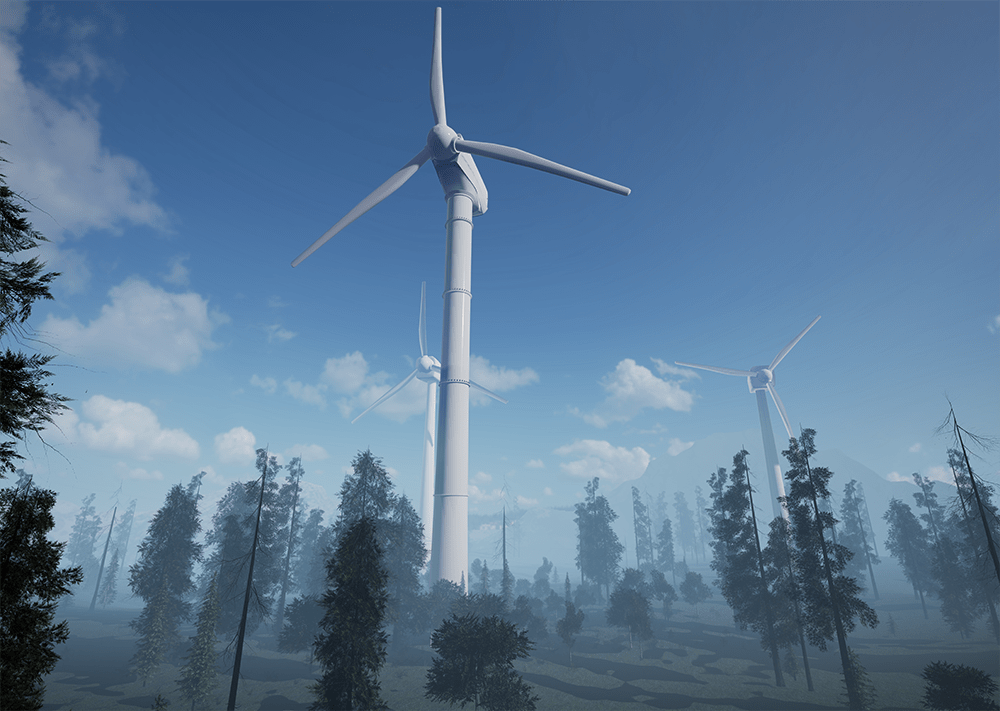
VR Vision builds virtual wind turbine training that closes that gap. Working with renewables leader Avangrid, VR Vision turned real SCADA fault codes into six immersive modules where technicians diagnose, isolate and repair faults inside an accurate virtual nacelle, hub and O&M building. Below is each module, what technicians practice, and why it matters in the field.
Why wind turbine technician training is moving to VR
Demand for wind technicians is outpacing the training pipeline. The U.S. Bureau of Labor Statistics projects employment of wind turbine service technicians to grow 49.9% from 2024 to 2034, one of the two fastest-growing occupations in the country. Operators need new hires productive faster, without adding risk.
Traditional training struggles to keep up for three reasons:
- Turbine access is expensive. Taking a turbine offline for training costs generation revenue, and weather limits when crews can climb.
- Critical faults are rare. A technician might see an IGBT failure or a pitch valve fault only a few times a year, so the skills fade between real events.
- Mistakes are dangerous. A lockout/tagout error on a high-voltage cabinet or hydraulic system can be fatal. Live equipment is the worst place to practice a procedure for the first time. (See how VR supports safety and risk mitigation training.)
VR removes all three problems. Technicians run the full procedure, from the SCADA alert to HMI verification, as many times as they need, on any schedule, with zero exposure to energized equipment.
6 VR training modules for wind turbine technicians
Each module starts from a real fault or maintenance task and walks the technician through the complete workflow, from diagnosis to verification.
Contactor Replacement
A SCADA alert (5212 Bus Reload Protection, Thermal Relay Failure) sends the technician to a critical electrical cabinet.
What technicians practice
- Navigate schematics to identify the right breakers
- Perform hot-cold-hot voltage testing
- Apply proper lockout/tagout (LOTO)
- Replace the contactor and verify on the HMI
Field impact
Sharper diagnostic precision and stronger electrical safety compliance in critical cabinet systems.
Fan Yaw Motor Replacement
During scheduled maintenance, the technician troubleshoots a yaw fault.
What technicians practice
- Diagnose tripped breakers and motor faults (X52)
- Test with amp clamps and multimeters
- Execute safe LOTO procedures
- Confirm full yaw recovery on the HMI
Field impact
Safe motor handling habits in the elevated, confined nacelle environment.
Megger Testing and Generator Fan Motor Replacement
Starting in the O&M building, the technician responds to a thermal alarm raised in SCADA.
What technicians practice
- Respond to thermal alarms via SCADA
- Run megger insulation resistance testing
- Complete full LOTO and breaker isolation
- Replace the motor and run dual-speed HMI testing
Field impact
End-to-end practice of electrical testing and integrity verification workflows.
Converter Cabinet IGBT Replacement
Fault code 5234 (Phase T Rectifier) simulates an advanced power electronics failure.
What technicians practice
- Identify IGBT and driver damage
- Safely de-energize and apply LOTO
- Replace the IGBT and bottom stack modules
- Validate with a pole test and HMI check
Field impact
Proficiency in power electronics and high-voltage safety, on a fault most technicians rarely see in the field.
Turbine Hoist Operation
An onboarding module that teaches safe load handling inside the turbine.
What technicians practice
- Explore the internal turbine layout
- Practice rigging, PPE and load balancing
- Operate the hoist in the nacelle
Field impact
A strong fit for new-hire onboarding and mechanical safety refreshers.
Proportional Valve Replacement
The technician troubleshoots an unresponsive blade pitch system.
What technicians practice
- Analyze schematics for valve positioning
- Run hot-cold-hot testing and depressurize the hydraulics
- Replace the valve and re-pressurize the system
- Restore blade pitch on the HMI
Field impact
High-stakes hydraulic problem-solving with zero real-world risk.
VR vs. traditional wind turbine training
| Classroom | On-turbine | VR training | |
|---|---|---|---|
| Access to equipment | Diagrams and slides | Requires taking a turbine offline | Full virtual nacelle, hub and O&M building, any time |
| Rare faults | Discussed, not practiced | Only when the fault actually happens | Repeat any fault on demand |
| Safety risk while learning | None, but no hands-on practice | Real height and electrical exposure | Zero exposure to energized equipment |
| Consistency across sites | Depends on the instructor | Depends on the site and crew | Same scenario at every wind farm |
| Performance data | Written tests | Supervisor sign-off | Real-time tracking in Vision Portal |
Deploy across every wind site with Vision Portal
Every module runs on Vision Portal, VR Vision’s enterprise VR training platform. It adds remote assistance, real-time performance tracking, multiplayer sessions and LMS integration, so crews at different wind farms train on the same scenario and are measured the same way.
The wind modules sit alongside VR Vision’s broader maintenance and technical operations training and VR training for energy and utilities. To size the payback for your fleet, run the numbers in the VR training ROI calculator.
Wind turbine technician training FAQ
What is VR wind turbine technician training?
It is hands-on practice inside a virtual wind turbine. Technicians wear a VR headset and work through real procedures, like diagnosing a SCADA fault, applying lockout/tagout and replacing components, in a 3D replica of the nacelle, hub and electrical cabinets.
Does VR training replace GWO certification?
No. GWO Basic Safety Training and site-specific qualifications are still required. VR training complements them by giving technicians repeatable practice on the specific troubleshooting and repair tasks they will perform on your turbines.
Which skills can wind technicians practice in VR?
VR Vision’s current wind modules cover contactor replacement, fan yaw motor replacement, megger insulation testing, converter cabinet IGBT replacement, hoist operation and proportional valve replacement, including the LOTO, voltage testing and HMI verification steps in each.
Can the modules be customized to our turbines and procedures?
Yes. VR Vision builds custom VR training from your own procedures, equipment and fault codes. The modules on this page were built with Avangrid using real SCADA scenarios.
How is VR training rolled out across multiple wind farms?
Through Vision Portal, which delivers the same scenarios to every site and adds remote assistance, multiplayer sessions, real-time performance tracking and LMS integration.
See the wind turbine modules in action
Walk through all six modules with the VR Vision team and get a fixed-price pilot proposal for your wind fleet.
Book a demo →Read the Avangrid case study