
Can AI Build Your VR Training? What It Does Today and Where It Stops
AI tools can produce a convincing VR demo in an afternoon. A training program that is accurate, runs on a standalone headset, and passes IT review takes far more. This guide maps the full workload and shows where AI helps and where it stops.

The short version
- AI is useful for parts of VR production. It drafts code, generates generic 3D props and textures, and handles voiceover and translation.
- It cannot yet deliver a deployed training program. Generating content is a small share of the work.
- The hard parts are accuracy, performance, and rollout. The training has to match your equipment and procedures, run smoothly on a standalone headset, and clear security and IT.
- The common failure is a strong demo followed by a stall. Internal AI builds tend to stop at optimization, validation, or IT review.
What AI does well today
The case for AI in VR production is real, and any honest guide has to start there. As of this writing, AI tools do five things well enough to use in production work.
- Code drafts. AI writes working scripts for common interactions in engines such as Unity. In the hands of an experienced developer, that saves real time.
- Generic 3D props. Text-to-3D and image-to-3D tools produce background objects quickly: a toolbox, a hard hat, a pallet.
- Textures and materials. Surface detail such as concrete, painted steel, and worn rubber can be generated in minutes.
- Voiceover and translation. AI narration sounds natural and makes multi-language versions affordable.
- First-draft scripts. Given an SOP document, AI produces a reasonable first pass at training steps and quiz questions.
VR Vision uses these tools where they save time. The question for a training buyer is what happens after the first draft.
The full workload, and where AI stops
A VR training program has eight workstreams. AI contributes to several of them. As of this writing, it finishes none of them without skilled people.
| Workstream | What AI does today | The gap |
|---|---|---|
| SOP capture | Summarizes written procedures. | It cannot interview your experts or watch how the job is done on site, which is where written procedures and real practice differ. |
| Instructional design | Drafts steps, prompts, and quiz questions. | It cannot judge which errors are dangerous, or take responsibility for accuracy. |
| 3D assets | Generates plausible generic objects. | The result is not your equipment. Dimensions, labels, and control positions are invented. |
| Optimization | Very little. | Generated models are too heavy for a standalone headset and must be rebuilt by hand. |
| Interactions | Writes code for individual behaviors. | Hand tracking, physics, step logic, and error states have to work together, and an engineer has to own that. |
| Testing | Reviews code for errors. | AI cannot wear a headset. Frame rate, comfort, and usability problems are found only on the device. |
| Security and IT | None. | Device management, sign-on, data handling, and network review are organizational work. |
| Rollout and upkeep | None. | Trainers need onboarding, results need to reach training records, and someone has to update the module when the procedure changes. |
Why standalone headsets are the hard part
Most enterprise VR training runs on standalone headsets such as the Meta Quest 3, because they need no PC, no cables, and no dedicated room. The trade-off is processing power. A standalone headset runs on a mobile processor, the same class of chip found in a phone.
Meta VR Glasses, which ship in spring 2027, move the processor and battery into a pocket-sized compute puck and run the full Meta Quest app library.
That chip has to draw the whole scene twice, once for each eye, 72 to 90 times per second. When it falls behind, the image stutters and trainees feel sick. A desktop demo hides this problem completely, because a desktop graphics card can push through content a headset cannot.

What a raw AI-generated model typically comes with
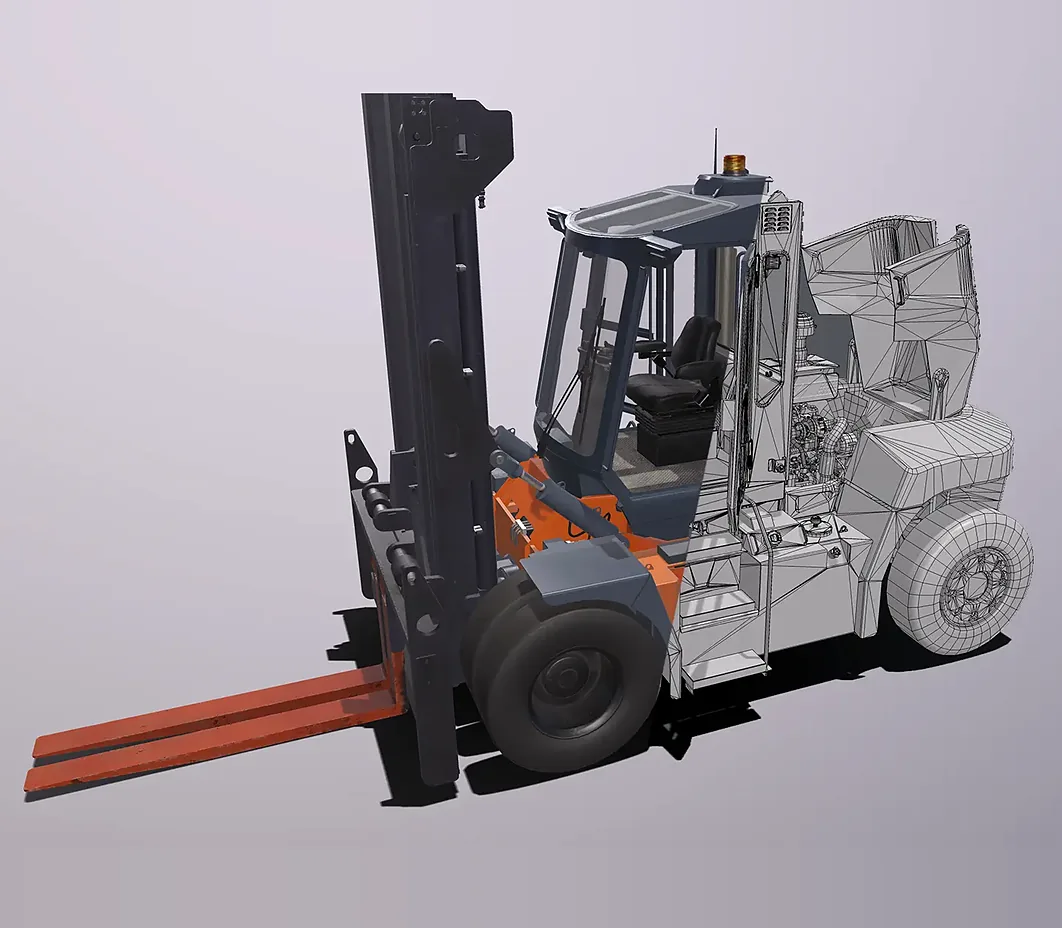
- Far too much geometry. The model contains many times more triangles than a mobile chip can draw at speed.
- Disorganized structure. The surface is a tangle that is difficult to edit, animate, or simplify cleanly.
- Poor texture mapping. The layout that wraps images onto the model wastes memory and causes visible seams.
- Lighting painted into the texture. Shadows and highlights are baked in, so the object looks wrong once it sits in a lit scene.
- No simplified versions. Headset apps swap in lighter models at a distance. Generated assets ship with one version only.
- Fused parts. A valve handle or breaker switch is merged into the body of the model, so it cannot move.
What it takes to make it run
A 3D artist rebuilds the surface with clean, efficient geometry, a step called retopology. Textures are remapped, combined, and compressed. Lighting is calculated in advance. Simplified versions are created for distance viewing, and the scene is set up so the headset skips anything the trainee cannot see. Each change is then checked on the device.
This is skilled manual work today. AI tools assist with individual steps, and none of them handle the full job.
Why a digital twin is not a generated model
A digital twin is a virtual copy of a specific real asset: your substation, your production line, your aircraft bay. Its value comes from matching the real thing. Dimensions, labels, control positions, and the order in which things happen all have to be right.
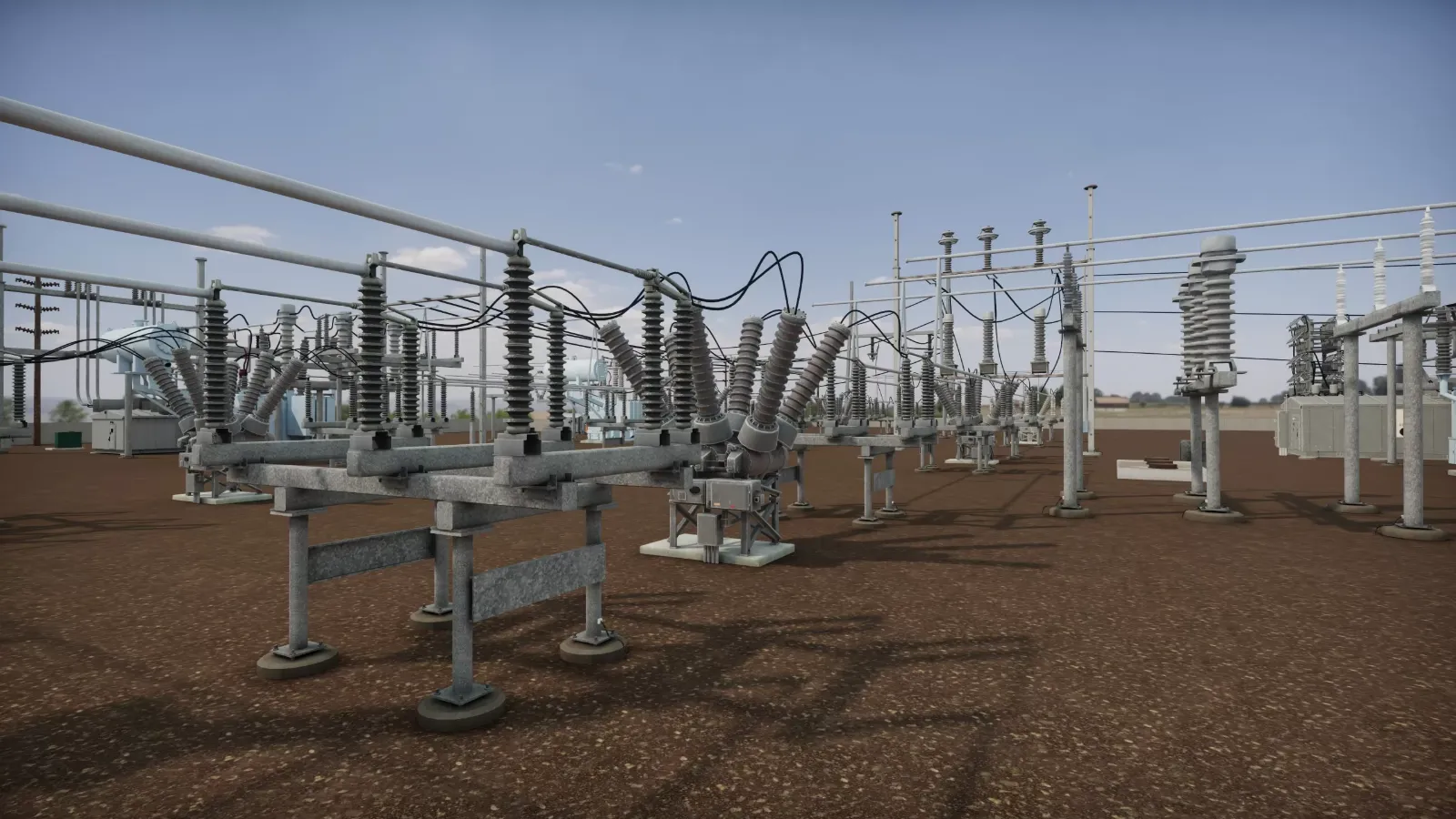
That accuracy comes from source data. A twin starts with CAD files, laser scans or photo capture, site photographs, and time spent with the people who operate the equipment. CAD models are built for engineering, so they arrive far too detailed for a headset and have to be rebuilt as well.
AI generation works the other way. Asked for a switchgear cabinet, it produces a plausible switchgear cabinet. It has no knowledge of your cabinet, so every detail is a guess.
The enterprise layer
A finished module still has to be approved, deployed, and adopted. None of this is a content generation problem, and it is where internal projects most often stall.
Security review
What data the application collects, where it is stored, and how headsets are locked down on site.
IT sign-off
Device management, network access, user sign-on, and a controlled process for pushing updates.
SOP validation
The safety owner and subject matter experts confirm every step, hazard, and error condition, and the sign-off is documented.
Change management
Trainers are onboarded, sessions are scheduled, results reach training records, and someone owns updates.
What a deployed program looks like: Avangrid
Avangrid is a sustainable energy company with a footprint in 24 states. VR Vision built a persistent multiplayer simulation where its trainers and trainees meet and learn together from any state, with courses covering substations, wind turbines, switching, gas leaks and confined space rescue.
The content was one part of the delivery. VR Vision supplied hundreds of Meta Quest headsets across the US and set up a user login for every trainee, with hardware support, maintenance and updates across all facilities. Results are tracked per user and pushed to Avangrid's LMS.
Technicians reached competency 65% faster than with traditional training.
- 65%Faster to competency than traditional training
- 100sMeta Quest headsets deployed across the US
- 24States in Avangrid's operating footprint
Virtual reality is a huge step forward for our already best-in-class training program. If anybody is going to make immersive learning the next big thing in clean energy, it's Meta & VR Vision.
What Vision Portal covers
Vision Portal is VR Vision's managed VR training platform. It handles the parts of a program that sit around the training content: user access through single sign-on, integration with the learning management system, and analytics on who trained, how they performed, and where they made errors.
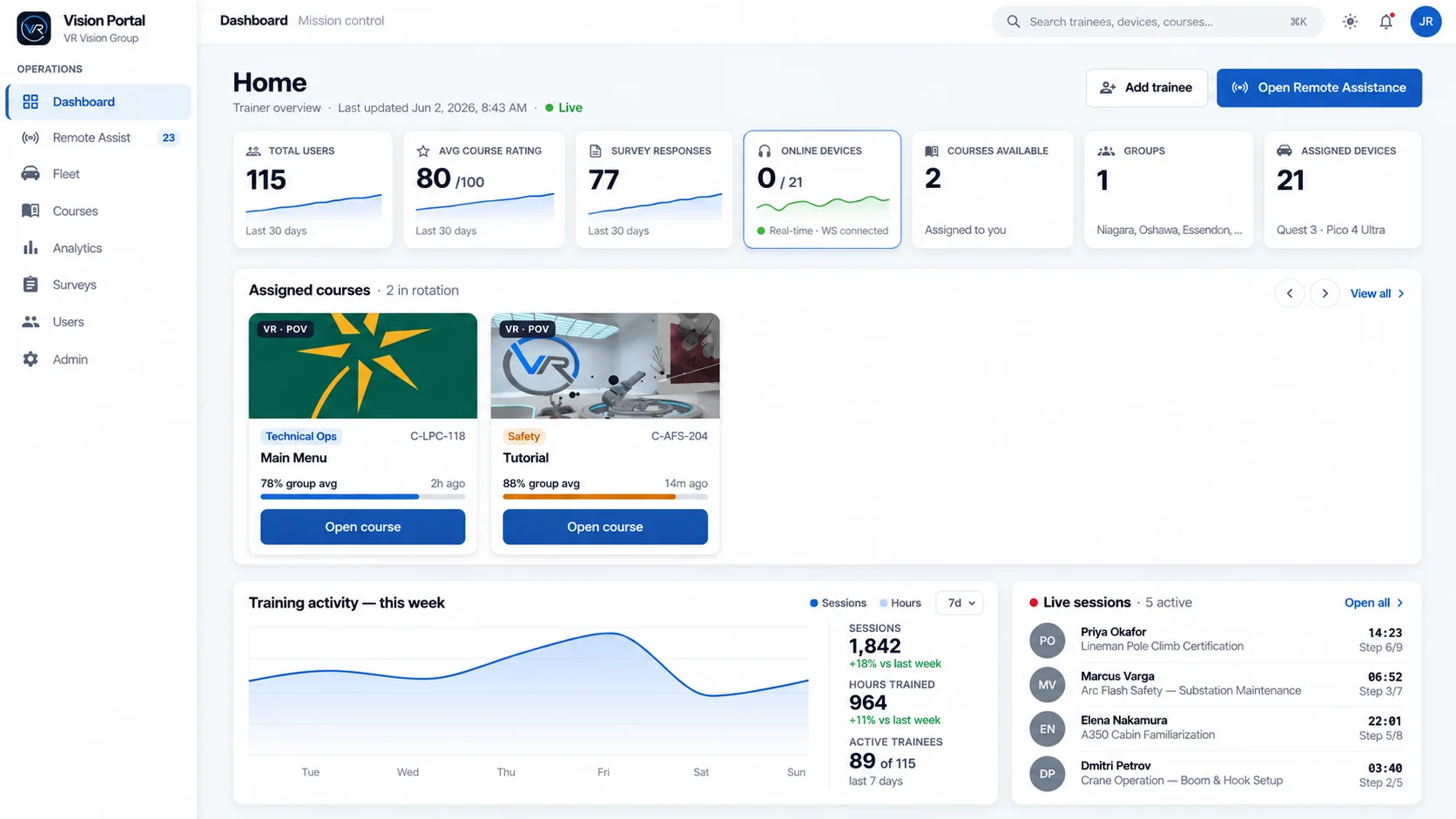
This matters for the AI question. Even a perfect AI-built module would still need a way to reach trainees, identify them, and report results. Building that layer internally is a software project of its own.
How an internal AI build tends to unfold
The timeline below is illustrative. The sequence is the point: each stage exposes work the demo did not show.
- Week 1The demoA generated scene runs on a desktop. Stakeholders are impressed and the project gets a green light.
- Month 1The headsetThe scene stutters on a standalone device. Models need rebuilding and interactions break with real hands.
- Month 3The accuracy checkSubject matter experts find wrong labels, missing steps, and the wrong sequence. Every fix is manual.
- Month 6The rolloutSecurity and IT reviews begin. There is no plan for devices, sign-on, records, or updates.
A fair cost comparison
AI subscriptions are inexpensive, which makes an internal build look cheap. The fair comparison is the total cost of reaching a deployed, validated program, counted in staff months as well as dollars.
| Cost line | Internal AI build | Delivery partner |
|---|---|---|
| People | Developer, 3D artist, and instructional design time, usually taken from other work. | Included in the scope. |
| Tools | AI subscriptions, engine licenses, and headsets for testing. | Included in the scope. |
| Rework | Unknown until the content is tested on a headset and reviewed by experts. | Scoped and quoted before work starts. |
| Platform | Sign-on, LMS integration, and analytics must be built or bought. | Provided by Vision Portal. |
| Maintenance | An internal owner has to be assigned and kept available. | Covered by a maintenance agreement. |
| Risk | Inaccurate training can reach the floor without review. | Validated with subject matter experts before release. |
When building it yourself makes sense
Some VR content does not need a delivery partner. Internal teams with AI tools can do good work where accuracy and headset performance matter less.
Good candidates for an internal build
360-degree video walkthroughs of a site. General awareness content with low stakes. Early prototypes that test whether an idea deserves funding.
Signs it is a delivery project
A mistake in the procedure can hurt someone or damage equipment. The training must match specific equipment. It will run on standalone headsets across several sites. Security and IT have to approve it.
A prototype built in-house is also a useful brief. It shows a delivery partner what the team has in mind faster than a written specification does.
Common questions
Can AI build a VR training application?
AI can build parts of one. It drafts code, generates generic 3D objects and textures, and produces voiceover. As of this writing it cannot deliver a complete training program that is accurate to your equipment, runs smoothly on a standalone headset, and is approved for enterprise rollout. Those steps still need engineers, 3D artists, and subject matter experts.
Why do AI-generated 3D models struggle on a standalone headset?
Standalone headsets run on mobile processors and must draw the scene twice, once per eye, at 72 to 90 frames per second. AI-generated models usually contain far more geometry than that hardware can handle, with inefficient textures and no simplified versions for distance viewing. They need to be rebuilt and optimized before they run smoothly.
What is a digital twin in VR training?
A digital twin is a virtual copy of a specific real asset, such as a substation or a production line. It is built from CAD files, scans, and site photographs so that dimensions, labels, and controls match the real equipment. A model generated by AI from a text prompt is a plausible lookalike and does not qualify.
Will AI be able to do this soon?
The tools are improving quickly, and asset generation and coding assistance will keep getting better. The parts that depend on your organization will remain human work for longer: capturing how the job is really done, validating accuracy, clearing security and IT, and managing rollout. It is worth reviewing the question each year.
Can ChatGPT or Claude build a VR training app in Unity?
They can write working scripts for common interactions in engines such as Unity, and in the hands of an experienced developer that saves real time. They cannot deliver the finished application. Hand tracking, physics, step logic, and error states have to work together, an engineer has to own that, and frame rate and comfort problems are found only on the device.
Can AI create a digital twin from photos or video?
Not on its own. A digital twin starts with source data: CAD files, laser scans or photo capture, site photographs, and time spent with the people who operate the equipment. Photo capture is one input among several. A model that AI generates is a plausible lookalike, so dimensions, labels, and control positions are guesses until someone checks them against the real asset.
How long does it take to build custom VR training?
Our VR training costs guide puts a custom build at 3 to 4 months to a working pilot and about 5.5 months to a production release. The schedule depends less on generating content than on the work around it: capturing the procedure, optimizing for the headset, validating with subject matter experts, and clearing security and IT.
What does it cost to build VR training in-house compared with using a partner?
Our VR training costs guide prices a custom 3D module at $65,000 to $120,000. The closest in-house route it lists, self-serve authoring tools, runs $75,000 to $150,000 in year one, mostly internal team time. An internal AI build has no fixed price, because the rework is unknown until the content is tested on a headset. See our VR development costs breakdown.
Does VR Vision use AI in its own production work?
Yes. VR Vision uses AI tools where they save time: drafting code, generating generic 3D props, textures and materials, producing voiceover and translation, and writing first-draft scripts. Engineers, 3D artists, and subject matter experts still own accuracy, headset performance, and validation, because those are the parts AI does not finish without skilled people.
Scope it properly before you build
A 20-minute call is enough to map a training idea against the eight workstreams and see which parts suit an internal build and which do not.
VR Vision has delivered VR training programs for organizations including Toyota, Siemens, Coca-Cola, and Toronto Hydro.